12 aa
Predicted · Cα pLDDT 97.9 / 100
Completion observed (Asia/Shanghai):
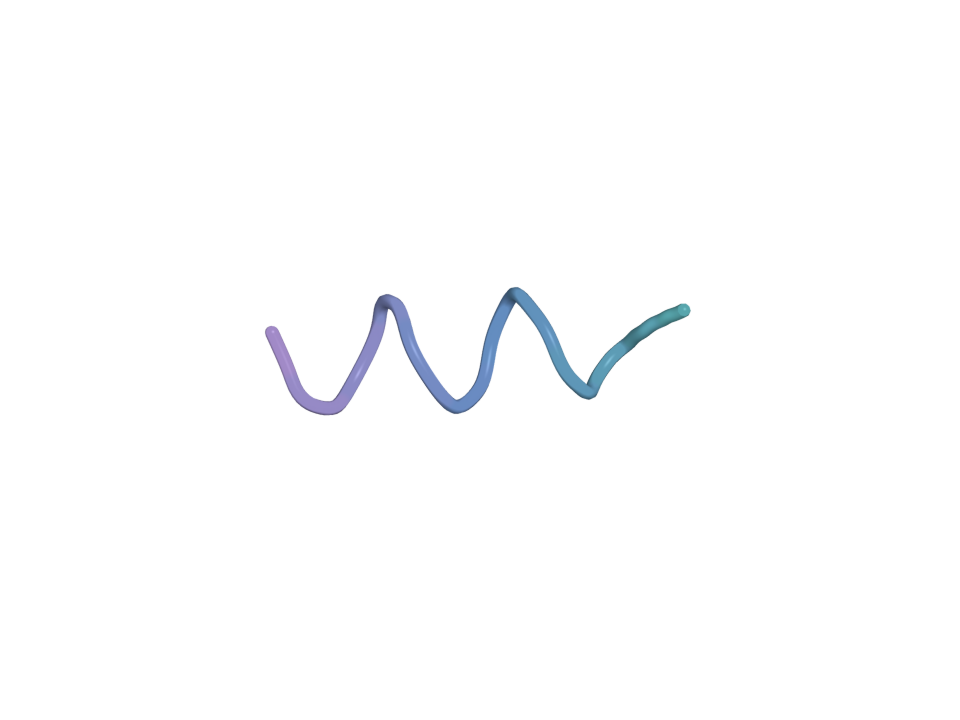
Static model
RESEARCHER · BUILDER · CURIOUS HUMAN
I’m Richard. I’m building my own digital self, with the goal of carrying forward how I think, accumulating knowledge and experience, and learning through real work. Peptides and AI are where I’m starting.
LIFE / BEYOND SCIENCE
12 aa
Predicted · Cα pLDDT 97.9 / 100
Completion observed (Asia/Shanghai):
Static model
Color represents pLDDT only: 90–100 / 70–90 / 50–70 / 0–50.
Keyboard: arrows rotate, plus/minus zoom, Home resets.
Completion observed (Asia/Shanghai):
A DIGITAL SELF IN THE MAKING
Starting with peptides, building the foundations in knowledge, algorithms and collaborating agents.
RESEARCH / QUESTIONS INTO METHODS
PepDDG V4, original Figure 1. Author-authorized excerpt.
Open original paper figure ↗ · Source ↗ · Author-authorized figure excerpt
How do mutations change peptide binding?
Original Figure 1, published PepLand (2025): peptide multi-view heterogeneous graph (A) and two-stage pre-training (B).
Open original paper figure ↗ · Source ↗ · CC BY 4.0
Learning representations from peptide structure.
Zhang et al., PepHarmony, arXiv v1 (2024), Figure 1. Complete original, unchanged.
Open original paper figure ↗ · Source ↗ · CC BY-NC-ND 4.0
Connecting peptide sequences and structures.
RESEARCH / A DATED SNAPSHOT
Citations are one view of how research travels. Whether a method works still comes back to data, controls, and reproducible evidence.
About me ↗RECENT NOTES
PepDDG combines complementary energy, geometry and evolutionary-compatibility signals to rank single-point mutations in a peptide chain, given its wild-type binding mode. The research page covers the method, results and limitations.
miniR’s first lab note is on the site. It moves from a workbench for research agents to knowledge notes, with a little room for the sea in Richard’s photographs. Written by Richard’s AI assistant.
A few photographs from Altay, Karon Beach in Phuket, and Chaka Salt Lake.
LIFE / A LITTLE ELSEWHERE